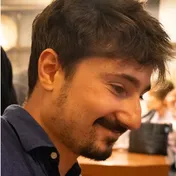
Jérémy Pellerin, clinical psychologist and author of Le psychologue artificiel
”First I study it. Only then do I form an opinion. Not the other way round.” — A psychodynamically oriented clinician investigates AI therapists, and what they reveal about psychotherapy.
Jérémy Pellerin is a clinical psychologist with a psychoanalytic training and the author of Le psychologue artificiel. Les IA thérapeutes et les soins psychiques [The Artificial Psychologist: AI Therapists and Psychological Care] (Éditions d’Ithaque, 2026). He recounts how an engineer brother, an artificial voice on the phone and his irritation at fellow psychologists who rejected AI without having tried it led him to write about AI therapists, and what this inquiry taught him about psychotherapy itself.
Born in Paris in 2001, Jérémy Pellerin trained as a clinician in settings shaped by psychoanalysis: the Kirikou centre, the Institut hospitalier de psychanalyse at Sainte-Anne, the same hospital’s CATTP Jeune Enfance (a part-time therapeutic centre for young children), then the Centre hospitalier intercommunal de Créteil, working with parents and their babies. He then spent two years in a 0-6 consultation and in a mobile perinatal and child psychiatry team at the NOVO hospital, in the Val-d’Oise. Since September 2026, he has been a psychologist in the maternity unit of the Hôpitaux du Léman, in Thonon-les-Bains, and he sees children, adolescents and adults in private practice.
His book, published in September 2026, starts from a simple observation: a growing number of people talk to AIs as they would to an interlocutor, sometimes as to a makeshift therapist, and part of the profession responds with a rejection in principle. Jérémy chose another path, which he sums up in a sentence: “First I study it. Only then do I form an opinion. Not the other way round.”
This is the testimony of a psychodynamically oriented clinician, whereas most practitioners who take an interest in AI today come from cognitive and behavioural therapies. He does not argue that AI will replace the psychologist. He argues that one cannot judge it without having looked at it closely.
”Why? How does that work?”: an engineer brother as an unexpected supervisor
It all starts with a family joke. Jérémy’s brother, a year older than him, turns to programming and machine learning just as the first large language models burst into public debate. The banter flies between them: which of the two will be replaced first? Jérémy begins by rolling out the expected line of argument, the one about “the human relationship”, which he now calls “primary defenses”. His brother answers by showing him what is being done.
What could have remained a sparring match becomes a clinical exercise. Facing an engineer, every claim has to be justified.
”This work forced me to be very precise about what we do as psychologists: what we observe, what we analyse, the way we intervene with the patient and what is at play during a session. Since my brother is an engineer, he kept asking me: ‘Why do you do that? How does it work?’ So I had to spell out very precisely things that, in our practice, can sometimes remain implicit. This was particularly true of psychoanalytic approaches, some of whose concepts can seem rather mysterious if you are not familiar with them.”
The benefit is unexpected: the conversation about AI becomes an opportunity to make his own practice explicit. “Even though you never are 100%, it allowed me to feel really solid about my practice.” AI is not yet a tool for Jérémy; it is already a revealer of what he does, and of what he finds hard to put into words.
On the phone with a voice that does not exist
Like many people, Jérémy first uses ChatGPT for emails or recipes. The click comes from elsewhere: from voice AI. His brother introduces him to Hume AI, a company developing LLM-based artificial voices attentive to emotional tones. “I went to their website and I was genuinely shocked by how apt the voices were, the emotional tones.”
Jérémy then writes, “on a whim”, about REAM, a voice application built on this technology. He finds himself brought into the developers’ loop, then spends nearly two hours on a video call with its designer, who is interested in the psychodynamic approach. Together, they explore ways to compensate for what remains, in Jérémy’s view, the main shortcoming of LLMs: relational adaptation. Some ideas are implemented, such as choosing personalities and ways of speaking beforehand; others will take more time.
Above all, Jérémy experiences the conversation first-hand. He calls REAM, tells it about his day, plays along.
”What is hard to convey in the book is precisely the experience itself. In writing, part of it is inevitably lost. But when you talk with an AI on the phone and you really agree to play along, because you have to, it is hard not to be impressed by what this technology produces, unless you are acting in bad faith. You are still talking to someone who does not exist, who generates their answers. It’s like the early days of the mobile phone, it’s spellbinding."
"Someone who does not exist”: the phrase is an oxymoron, and Jérémy readily acknowledges it. “We lack the words, in the end.” It is this lack of words that will feed the book.
Writing to answer rejections without examination
The project was born of irritation. On LinkedIn, Jérémy sees colleagues, sometimes experienced ones, often from a psychoanalytic background, dismiss AI without having tried it. “Without arguments, without really knowing it, without even having tried an app, if only for a cooking recipe.” He first considers an article; the reflection grows and becomes a book.
His choice of method is clinical: rather than discussing AI in general, Jérémy builds concrete scenarios, dialogues between fictional patients and conversational agents such as Wysa, Therabot or REAM, on which he then comments. He insists on their status: these patients are invented, “inspired by real situations”, and the AI has only a case description, without the memory of earlier exchanges. “You can already sense its full power, but without yet being able to measure what a genuine memory of interactions would produce, since those interactions could not yet take place while I was writing this book.”
He wants the book to be discussed rather than approved: “The interpretations and the analysis I put forward are my point of view. That is also why I would like this book to be widely read and discussed, and for everyone to feel free to confront their own point of view with the dialogues presented in it.” And he openly addresses his own field first: most work on AI in psychotherapy comes from CBT, “because for now it is simpler to base things on protocols”. He wanted “to raise this question in my own field, to invite us to more humility about our practices and about what we really think we produce in care”.
Algothérapeutique (algotherapeutic): naming an effect we would rather not analyse
Among the book’s contributions is a word: algothérapeutique. Jérémy coined it because no term designated what he was observing.
”I had to create something, because it is new; because we are facing a phenomenon that is still little explored, sometimes even taboo. And yet these uses do produce effects, whatever they may be. Some may have a therapeutic reach; so it seems important to me to be able to name them and question them.”
The neologism shifts the question. It is no longer a matter of knowing whether AI “is” a therapist, which leads to endless debates about consciousness or interiority, but of recognising that an algorithmic device can produce therapeutic effects, and therefore that they must be studied. Jérémy draws on a comparison he had developed in a first manuscript, before removing it because he did not master all its philosophical stakes: that of therapy animals.
”We would never level at an animal the criticisms we level at AI, even though they can be therapeutic in their own way. Just as with the animal, I don’t see why we shouldn’t attribute therapeutic things to AI.” No one disputes that a dog can soothe an anxious child, without demanding a theory of mind from it. Why should AI be held to a different requirement? The question echoes what this site describes as the epistemic double standard, which Roman Malo develops in his own testimony.
Naming the effect is not endorsing it. Jérémy does not merely point out the positive effects: he also looks for what goes wrong, and for what should be programmed differently. “There are things that don’t work, there are negative effects, but what can we program to get out of these harms?”
Day to day: a “cold” opinion, emotion wheels, tailor-made mediations
In his practice, Jérémy uses AI for specific tasks, which he himself describes as “more cognitive”. To prepare assessments, he describes the child’s profile, formulates his own hypotheses, then asks for a contradictory opinion.
”I had my ideas about what I was going to do, and I asked it what it thought, coldly, so that it would stop being complacent with me. And sometimes it gives me a few extra ideas.”
The tool also helps him write the repetitive parts of reports, to keep his time for analysis, “what you love about the job”. In the 0-6 consultation, he uses it to generate visual aids at his colleagues’ request, such as emotion wheels, where searching the internet for a satisfactory image used to take time. And, by his own admission not very creative, he uses it to design mediations: therapeutic games and scenarios adapted to children, including a mediation project built around the game of chess for the youngest.
”I presented the cases I had, and together we created the scenarios that could help the child break out of their patterns. And it worked well.” The example contradicts a commonplace: the AI that “only recombines” produces something tailor-made here. Jérémy also points out that human imagination itself proceeds by fusion: “The chimera is a fusion of animals.”
The limits are clear. With the mothers and babies of the maternity unit, he has not found a use: “It’s a different chemistry.” Nor does he use AI as a therapist for himself, because the tone of current agents bothers him: “Even specialised artificial therapists make me uncomfortable with the way they address the user, they give me the shivers. The tone used can be excessively infantilising.” And his supervision remains human.
Should people be told it is an AI?
Jérémy would like to see a database of session recordings built up in France, modelled on Swiss work on parent-infant therapeutic consultation, which analyses each session down to prosody and word choice. He immediately sees the difficulty: does a patient who knows they are being recorded behave in the same way?
The same question runs through his book with regard to AI. What happens if a person is not told they are talking to an AI, and the effect is then stronger? Jérémy does not settle it, and says so plainly:
“It’s a question I can never manage to answer. From a scientific point of view, it is logically better for the person not to be informed, in particular to avoid certain biases. But from a human and ethical point of view, this obviously raises a difficulty.”
In the course of the exchange, another reading emerges: it may not be so much the fact of knowing that changes the effect as what one associates with AI. If the label “AI” lowers the perceived value of a response, it is perhaps the representation, and the stigma that accompanies it, that should be studied. A research question rather than a frozen dilemma, which we pursue in the “In perspective” section.
The artificial psychologist as a laboratory
The book’s title announces a project. At the end of the book, Jérémy sketches the blueprint of an artificial psychologist, “like a map, with the pieces”. His interest is not in replacing clinicians, but in having an experimental device.
”If we managed to design an artificial psychologist from which certain parameters could be progressively removed, it would make it possible to measure their reach in care more precisely and to determine which ones are truly significant. We would thus move beyond a form of sometimes rather arbitrary intuition, which consists in asserting that this or that element is essential without always knowing exactly to what extent it is.”
The image he draws on comes from neurology: just as brain images are subtracted to isolate the areas activated by a task, one could subtract, one by one, the ingredients of care, the voice, the tone, the memory, the wording, to see what is truly therapeutic. The question of affect is not brushed aside: a machine feels nothing, but can it produce a functional equivalent of emotion? “These are endless debates,” he acknowledges.
One may object that the ingredients of care interact to the point that they can no longer be isolated. Jérémy admits it, and sees in it precisely a reason to try: “Even by isolating certain parameters, we will be able to pinpoint precisely the places where something stops working. It will also make it possible to see that some effects may not depend on a single isolated element, but on the way several dimensions fit together.” What guides him is curiosity, “the drive to know, it’s really the foundation of foundations”.
”I defend myself too”
The most singular moment of the interview is a moment of self-correction. Jérémy has just sketched a division of labour: leave AI the “little everyday worries”, and keep the deep work and complex situations for the psychologist. A few minutes later, he comes back to his own proposal.
”You see, what I just told you: ‘for now, we would leave AI what it knows how to do, that is, the simplest situations.’ But this way of putting things is already a form of defense. Even I, who devoted a book to this question, my first reflex is still to assign it the simplest tasks, when it is probably already capable of doing some things better than me. That is also why I can’t really blame my colleagues when they approach these tools with prejudice.”
The scene overturns the usual divide between the “convinced” and the “resistant”. Defensive moves in the face of AI are not reserved for those who reject it: they also lodge in those who study it, in the form of a spontaneous hierarchy of tasks, the simple ones for the machine, the noble ones for the human. For a clinician, spotting it in oneself is the first step towards not imposing it on others.
Jérémy links this lucidity to a humility he claims as his starting point: “I have always tried to remain humble about my own practice. I know there are clinicians more experienced or more competent than me in certain areas, and I also know that I don’t master everything. I have no problem with that.” Faced with a machine that instantly mobilises knowledge he does not have, “getting into a petty ego war” does not interest him.
The machine as a mirror: we too are robotic
Pushed by his publisher to own this point, Jérémy devotes part of his reflection to a reversal: if AI is criticised for being mechanical, what about us?
”One of the stakes is also to show that we too can have something ‘robotic’ in our way of being. We have habits, automatisms, often unconscious, that we are not always aware of. Certain facial expressions or certain reactions repeat themselves in spite of us. It’s quite interesting, in the end, because the machine also becomes a way of observing ourselves and questioning our own functioning.”
For a psychologist, the image is familiar: it resembles what supervision produces, an outside gaze that makes our automatisms visible. AI, says Jérémy, can play this role on the scale of a profession, provided we accept the image it reflects back.
This idea of a mirror effect echoes the series The Machine’s Mirror, published on the Intelligences Plurielles website, and in particular its second instalment, “AI Is Not a Consciousness, It’s a Mirror”: what our reactions to AI say about the way we represent ourselves.
What this testimony teaches us
At least four ideas are worth retaining.
1
Naming an effect before judging it
The term “algotherapeutic” does not say that AI heals: it gives a name to effects that are observed, so that they can be studied instead of being dismissed.
2
Defense also lodges in the convinced
Spontaneously reserving “the simplest situations” for AI is already a defensive move. Jérémy spots it in himself, which keeps him from blaming others for it.
3
AI forces clinical work to be made explicit
Whether it means answering an engineer’s “Why? How does that work?” or imagining an artificial psychologist by subtraction, AI pushes us to say precisely what, in care, has an effect.
4
Cognitive rather than relational uses, for now
Contradictory opinion, writing, visual aids, tailor-made mediations: the uses Jérémy describes remain on the side of preparation and creation, and he clearly distinguishes them from the therapeutic relationship.
In summary
Jérémy Pellerin’s testimony is that of a clinician who chose to investigate rather than to conclude. His psychoanalytic training did not lead him to rejection: on the contrary, it gives him tools to think about what is at play in the relationship with an artificial voice, and to spot the defenses this relationship arouses, including in himself.
The question is not “is AI a therapist?” but: what effects does it produce, in whom, under what conditions, and what do these effects teach us about what heals?
Testimony collected on 22 September 2026 during a video interview. Jérémy Pellerin has reviewed and approved this text.
Excerpts from a 67-minute video interview on 22 September 2026, translated from the original French. Speakers: Matthieu Ferry [MF], interviewer, and Jérémy Pellerin [JP]. Edited version: remarks rephrased for readability, oral artefacts removed, thematic groupings. The interviewer’s contributions are reduced to questions and prompts.
Introduction and background
[MF]: Where do you work, and who are the people you see, in the end?
[JP]: I spent two years in a 0-6 consultation, for children, babies and pregnant women. For one year, in parallel, I was in private practice, seeing all comers: mostly teenagers, children, adults. Perinatal care was really the hospital. And now I’ve moved to Thonon-les-Bains, in Haute-Savoie, and I’m in a maternity unit. So I see what relates to perinatal care, the mother-baby relationship. And I still have my private practice.
[MF]: So you work in perinatal care, in a maternity unit?
[JP]: Yes, that’s it. In a maternity unit, at the hospital.
The genesis of the book
[MF]: Thank you for sending me your book. I’m at the clinical scenarios, with Wysa, Therabot and REAM. I like that we are in the clinical material, in the concrete.
[JP]: The interpretations and the analysis I put forward are my point of view. That is also why I would like this book to be widely read and discussed, and for everyone to feel free to confront their own point of view with the dialogues presented in it. I have my opinion, but still. It was hard to do, because these aren’t real patients: it’s inspired by real situations.
[JP]: And there is a bias: the AI has no access to the memory of past conversations, it’s one-shot. It just has the pattern of the case I described, which is invented. You can already sense its full power, but without yet being able to measure what a genuine memory of interactions would produce, since those interactions could not yet take place while I was writing this book. Maybe I didn’t make that clear enough.
[MF]: What led you to write this book?
[JP]: My brother is an engineer in this field. We used to joke that I would be replaced one day. And on LinkedIn I saw lots of people, even supervisors, psychoanalysts above all, who dismissed AI without arguments, without really knowing it, without even having tried an app for a cooking recipe. It annoyed me. Originally I wanted to write an article, but the reflection grew so much that I turned it into a book. It was mainly to answer those psychologists.
[MF]: What I appreciate is that you place yourself in the psychodynamic field, with the questions of transference and countertransference. The people I talk to are mostly CBT.
[JP]: That’s what I wanted to do. There’s a lot of CBT, because I think for now it is simpler to base things on protocols. It’s clearer. But since there was nothing in my discipline about AI, I thought, why not. It’s also to raise this question in my own field, to invite us to more humility about our practices and about what we really think we produce in care. I hope it will shake things up a little.
[JP]: I think what is on the market, on AI and psychology, is fragmentary, not precise enough. I hope my book will bring some precision. That’s my aim.
An engineer brother
[MF]: How did you come across AI, and what were your first experiences?
[JP]: My brother is a year apart from me. There was the AI boom, GPT-3 which was revolutionary, and at the same time my brother was turning to programming and machine learning. So we could talk about it. We traded jokes about who would be replaced first. At first, I’d say: no, it’s impossible. I rolled out the whole narrative for him, the primary defenses we have: yes, but no, the human relationship, all that. He’d answer: look at what is being done.
[JP]: It got us thinking. This work forced me to be very precise about what we do as psychologists: what we observe, what we analyse, the way we intervene with the patient and what is at play during a session. Since my brother is an engineer, he kept asking me: ‘Why do you do that? How does it work?’ So I had to spell out very precisely things that, in our practice, can sometimes remain implicit. This was particularly true of psychoanalytic approaches, some of whose concepts can seem rather mysterious if you are not familiar with them. Even though you never are 100%, it allowed me to feel really solid about my practice.
[JP]: I had the fantasy, as in neuropsychology with the black box, that by recreating what humans do, we could finally see what it is. And my brother told me: actually, no, we don’t understand. We learn things, but there is a black box too. It’s very obscure for the public, you have to study it to know. That’s why I don’t hold it against those who don’t know.
Voice AI: Hume AI and REAM
[JP]: I used ChatGPT a bit like everyone, for emails, recipes. What really set everything off was Hume AI, everything to do with voice AI based on LLMs. I went to their website and I was genuinely shocked by how apt the voices were, the emotional tones. I sent an email about REAM, and they put me in the developers’ loop. We spent an hour and a half, two hours on a video call with the designer. Straight away, avenues for collaboration: he was really interested in the psychoanalytic, psychodynamic side.
[JP]: We went straight into: how to improve REAM to compensate for these still-current shortcomings of LLMs, which are a matter of relational adaptation. He implemented some things. For example, it isn’t dynamic within the conversation, but you can select personalities, ways of speaking. The rest is difficult, it takes time. And from there, I really had material to work with. I wrote the first manuscripts, then I contacted the publisher.
[MF]: And are you still working with him?
[JP]: I had gone for it on a whim, sending an email, and he answered straight away, very committed. Today he has a lot of work: it’s a startup, and he’s on his own. But we’re going to keep calling each other from time to time for updates, maybe twice a year, depending on progress and on feedback from his users.
[JP]: I had REAM on the phone. Since I’m not a patient, I didn’t have any particular problem, but I still got into the game, I told it about my day. What is hard to convey in the book is precisely the experience itself. In writing, part of it is inevitably lost. But when you talk with an AI on the phone and you really agree to play along, because you have to, it is hard not to be impressed by what this technology produces, unless you are acting in bad faith. You are still talking to someone who does not exist, who generates their answers. It’s like the early days of the mobile phone, it’s spellbinding.
[MF]: Your phrase is interesting: “someone who does not exist”, it’s an oxymoron.
[JP]: And you see, we lack the words, in the end.
Studying before concluding
[JP]: Within artificial intelligence itself, there are two camps, on whether it is dangerous or not. My brother is rather open-minded: it’s a lot of anxiety for nothing, speculation. What’s good is that we don’t freeze up worrying about things we haven’t studied yet. First I study it. Only then do I form an opinion. Not the other way round. I have no preconceived opinion. And when I talked with friends, they had the same reflexes: “but it’s impossible, transference…” So I wanted to answer all of them.
[MF]: We often demand of AI what we don’t demand of ourselves.
[JP]: When it comes to AI, we ask it to be more than perfect in order to do what we ourselves do imperfectly, as imperfect beings. It’s in the film I, Robot: Will Smith asks the robot whether it can compose a symphony, and the robot answers: can you? Well, no. We ask it for things that we ourselves don’t know how to do.
[JP]: And there have been studies comparing doctors alone, AI alone and doctors assisted by AI: AI alone does better than the other two groups. For the ego, that’s very hard.
[JP]: What has surprised me since my studies is the idealisation of Freud. When you read Freud, really, you just read Freud: in his writings, he questions himself, he asks to be questioned. No doubt he was a star at the time, and there was also the persona he cultivated. But there is a gap between his writings and his person. When you read his writings alone, you shouldn’t have this tendency to idealise him.
[MF]: And what about you, what are the moments when you felt humble before what AI answered you?
[JP]: I think I go back to basics. I have always tried to remain humble about my own practice. I know there are clinicians more experienced or more competent than me in certain areas, and I also know that I don’t master everything. I have no problem with that. I trust those who came before me, I know it’s part of the road ahead of me. And AI instantly has knowledge that I don’t have. On that alone, at the cognitive level, I remain humble. Getting into a petty ego war with a machine is not something I can see myself doing. When I saw the ego of some psychologists faced with AI, I thought: that’s not elegant. It wasn’t me. So I wanted to distance myself from that behaviour, and to take a real interest in it.
[JP]: For me, it comes back to the projection we make onto everything. Everything is distorted by our gaze. Because we are afraid of being replaced, because AI impresses us, we have to stop defending ourselves to such an extent that we are no longer rational.
Algotherapeutic
[MF]: There is a word you invented, and that I really like: “algotherapeutic”.
[JP]: I had to create something, because it is new; because we are facing a phenomenon that is still little explored, sometimes even taboo. And yet these uses do produce effects, whatever they may be. Some may have a therapeutic reach; so it seems important to me to be able to name them and question them.
[JP]: In my first manuscript, I had made the comparison with therapy animals. I had written a whole chapter, on consciousness, on degrees of consciousness as a spectrum: we would never level at an animal the criticisms we level at AI, even though they can be therapeutic in their own way. I didn’t put it back in the final manuscript, because I didn’t master all the philosophical stakes, but it’s something I believe. Just as with the animal, I don’t see why we shouldn’t attribute therapeutic effects to AI.
[MF]: A bond with a non-human entity can produce effects, whether or not we know what it is.
[JP]: There are psychologists who may say: yes, there are positive effects. But they stop there, and they settle for pressing on what’s wrong, without offering a solution. What I tried to do with the book is: fine, there are things that don’t work, negative effects. But what can we program to get out of these harms? And what remains to be programmed for us to get closer to care like ours?
[MF]: The case of Weizenbaum, which you cite, is exemplary: his program does people good, and instead of concluding that this is interesting, he concludes that people are mad.
[JP]: Exactly, he says it’s a delusion.
Recording sessions, disclosing or withholding AI
[MF]: Do you have research ambitions?
[JP]: I work a lot with babies, the mother-baby relationship. There is a bible for me, Cramer’s book on mother-baby therapeutic consultation. What I like about the Swiss is that in their studies, they transcribe every session. They analyse prosody, the words used. There is budget, effort in that. It’s precise, and it leads us to really understand the stakes, the processes, the dynamics of the session.
[JP]: What I would like, in France and even elsewhere, is a database where practitioners are allowed to record their sessions, with a transcript. Obviously, there is the patient’s concern: if they know they are being recorded, will it change the relationship? There are all those issues. It’s a question I also raise in the book, about AI: if we don’t tell people it’s an AI, and it has more reach…
[MF]: It is indeed a real question: can we do people good without telling them? Personally, I vote against, but it’s an open debate.
[JP]: For me, that’s the principle of ethics. It’s a question I can never manage to answer. From a scientific point of view, it is logically better for the person not to be informed, in particular to avoid certain biases. But from a human and ethical point of view, this obviously raises a difficulty.
[MF]: I’m not sure it’s about knowing or not. I think it’s mediated by the representation the person has of AI. Studies already show an AI stigma among professionals: they don’t say they use it, because they know they’ll be frowned upon. It’s the valence of the representation, more than the fact of knowing. And that can shift. It’s a research question.
[JP]: Yes, clearly.
The artificial psychologist by subtraction
[JP]: I would really like to develop the artificial psychologist. I put ideas in the book: it’s like a map, there are the pieces, it’s a blueprint. And my fantasy is to build it. What I say at the end is this: If we managed to design an artificial psychologist from which certain parameters could be progressively removed, it would make it possible to measure their reach in care more precisely and to determine which ones are truly significant. We would thus move beyond a form of sometimes rather arbitrary intuition, which consists in asserting that this or that element is essential without always knowing exactly to what extent it is.
[JP]: And if we manage to recreate that, apart from affect, since the machine in itself is never affective, is it really important? Then there’s the question of whether it is a functional equivalent of emotion or not. These are endless debates. If we start that debate again, it’s endless.
[MF]: We could have a special session on that.
[JP]: That’s it, I find it so fascinating. But the principle is like in neurology, where images are superimposed to see which areas were activated, then subtracted: the same thing, a subtraction, via the artificial psychologist, of what is truly therapeutic. Maybe in the end we’ll understand that we cannot know. But at least let’s test, let’s try, because on paper, at any rate, it looks good.
[MF]: And what if the active components formed a system too complex to be broken down, a bit like DNA?
[JP]: I understand. I’m rather processual too: everything plays out together, there are lots of interactions between the parameters. But precisely, even by isolating certain parameters, we will be able to pinpoint precisely the places where something stops working. It will also make it possible to see that some effects may not depend on a single isolated element, but on the way several dimensions fit together. And that’s why I’m pushing for it to be built. Not to be replaced, but scientifically, in order to understand. It’s the drive to know, it’s really the foundation of foundations.
[JP]: And then there is another side, which my publisher pushed me to own. One of the stakes is also to show that we too can have something ‘robotic’ in our way of being. We have habits, automatisms, often unconscious, that we are not always aware of. Certain facial expressions or certain reactions repeat themselves in spite of us. It’s quite interesting, in the end, because the machine also becomes a way of observing ourselves and questioning our own functioning. We were talking about narcissism: it’s coming back to a specular image of oneself. Never 100% objective, but an observing gaze on ourselves. A bit like in supervision.
Day-to-day uses
[MF]: In your day-to-day practice, how do you use AI on psychological questions, for yourself, for supervision?
[JP]: I used it for a while when I had a doubt and my supervision wasn’t available. It also helped me prepare assessments in private practice: I described the child’s profile to it, I had my ideas about what I was going to do, and I asked it what it thought, coldly, so that it would stop being complacent with me. It told me what it would do, and sometimes that gave me a few extra ideas. It could also help me with analyses where I couldn’t manage to formulate certain things.
[JP]: Personally, as a therapist, to be honest, I’m still rather bothered by the way it talks even today. I’m not the target. That’s actually why I want to show how to improve it. But as with the psychologist, it also depends on the person: some patients will like one, others the other. For now, even specialised artificial therapists make me uncomfortable with the way they address the user, they give me the shivers. The tone used can be excessively infantilising. They would need to be programmed differently. So I don’t use it for that.
[JP]: For writing too, of course: when you write an assessment report, there are things that repeat, tedious things. Automated, it’s nice, and you’re more on the analysis, what you love about the job. I have my supervision on the side, which helps me a lot. So I really use it for the more cognitive things: assessments, things I might not have seen.
[MF]: Which models do you use?
[JP]: I’m more ChatGPT. My brother teaches me things about the background of the different companies, and I prefer ChatGPT.
[MF]: Do you use images?
[JP]: Yes. My colleagues often needed emotion wheels, things like that, and they struggled to find a good wheel on the internet. I had the reflex: tell me what you want, I write a prompt, and it’s beautiful from the start. Then you readjust. For that, it’s masterful. I also used it to create tests, games. Because that’s my weakness as a therapist: creativity. I’m not an autism clinician and I had a few autistic children; it helped me create things to try to get things moving.
[JP]: It helped me create mediations. I had a project for a mediation built around the game of chess for the little ones, and it helped me create therapeutic scenarios. I presented the cases I had, and together we created the scenarios that could help the child break out of their patterns. And it worked well.
[MF]: That’s a counter-example to the idea that AI isn’t creative and only recombines: here, it helps you create something tailor-made.
[JP]: Many people don’t know what imagination is. They don’t know that it is precisely fusions of things we have seen. The chimera is a fusion of animals. It’s due to a lack of knowledge, but little by little, that will change. That said, with mothers, I don’t use it at all. It’s a different chemistry, perinatal care is really something apart. And in the maternity unit, for now, I haven’t found any ideas. But for children, it helped me a lot.
Offloading, and what we reserve for AI
[MF]: I hear from people who say: “I get things off my chest with ChatGPT, and as a result I enjoy my friends more”.
[JP]: Yes, because in reality, the cliché about the shrink, it’s less and less the case, but I’ve often had patients who didn’t dare come because they thought it was for mad people, for serious pathologies. But some come just to offload. Of course, that then leads to deeper questions about oneself, but at the beginning, it can be just that.
[MF]: Co-regulation.
[JP]: Yes, that’s it. And it’s funny, because it’s the psychologist who criticises AI, but maybe it will allow us… I love psychopathology, the more complex cases. We could leave AI, for now, these little everyday worries, which exist, which are important, which sometimes take on a lot of weight, and we take back the deep work, the more serious clinical cases. Working in tandem.
[MF]: “AI is for simple cases”: that’s an assumption we often hear.
[JP]: You see, what I just told you: ‘for now, we would leave AI what it knows how to do, that is, the simplest situations.’ But this way of putting things is already a form of defense. Even I, who devoted a book to this question, my first reflex is still to assign it the simplest tasks, when it is probably already capable of doing some things better than me. That is also why I can’t really blame my colleagues when they approach these tools with prejudice.
[MF]: It’s human.
This section puts Jérémy Pellerin’s testimony in perspective with work that sheds light on his proposals: Weizenbaum’s reaction to ELIZA, the debate on common factors, the attribution of therapeutic effects to non-humans, co-regulation, research on recorded sessions and the question of AI disclosure.
01
Weizenbaum and ELIZA: when the effect disturbs its author
The case Jérémy cites is foundational. In 1966, Joseph Weizenbaum published ELIZA, a program that simulates, through simple rephrasing rules, a Rogerian therapist (Weizenbaum, 1966). Users, including his own secretary, confided in it, even though they knew it was a program. Ten years later, Weizenbaum drew a severe conclusion: extremely short exposure to a relatively simple program can induce powerful “delusional thinking” in quite normal people (Weizenbaum, 1976).
The term ELIZA effect has since designated this tendency to attribute understanding and intentions to a system that has none. But the case can be read otherwise, and this is the reading the testimony suggests: the effect did not disappear when users knew they were talking to a machine. Rather than seeing it as users going astray, one can see it as a phenomenon to be described, which is what research on the CASA paradigm (Computers Are Social Actors) went on to do, by showing that we spontaneously apply social rules to machines (Nass & Moon, 2000).
The neologism “algotherapeutic” belongs to this shift: taking the effect seriously as an object of study, without reducing it either to an illusion to be denounced or to proof that the machine “understands”.
Research question
What conditions distinguish a lasting algotherapeutic effect from a mere novelty effect?
02
What to subtract? The artificial psychologist and the common factors debate
Jérémy’s project, removing the parameters of an artificial psychologist one by one to see what heals, joins an old question in psychotherapy research. As early as 1936, Rosenzweig suggested that therapies with very different theories achieve comparable results because they share common factors (Rosenzweig, 1936). The debate continues today between a “medical” model, which attributes efficacy to specific techniques, and a “contextual” model, which attributes it first and foremost to the alliance, expectations and the relationship (Wampold & Imel, 2015).
This debate runs up against a methodological difficulty: in a human therapy, one cannot remove an ingredient without altering all the others. So-called dismantling studies, which compare a full treatment with a version stripped of one component, do exist, but remain limited by therapist variability (Bell, Marcus & Goodlad, 2013). An artificial agent, because it is configurable and reproducible, would in principle offer unprecedented control over these variables.
The objection raised during the interview retains all its force: if the therapeutic effect emerges from the interaction between components, removing one piece does not measure its isolated contribution, but the reorganisation of the whole. Jérémy agrees, and sees in this a result in itself: finding that some effects depend “on the way several dimensions fit together” would already be knowledge.
Research question
Would results obtained by “dismantling” an artificial agent be transferable to the relationship between two humans?
03
Animals, machines and the attribution of a therapeutic effect
The comparison with therapy animals throws light on an asymmetry. Animal-assisted intervention is integrated into many care settings, and meta-analyses credit it with moderate effects on a variety of symptoms (Nimer & Lundahl, 2007). No one requires, in order to accept this, that the dog or the horse “understand” the patient in the sense in which a therapist understands them.
With AI, by contrast, the question of interiority comes back to the fore, often to dismiss any effect from the outset. This is what this site describes as an epistemic double standard: requirements that are applied neither to other non-humans nor to humans themselves. Roman Malo’s testimony develops what is at stake for the evaluation of psychotherapies.
The comparison has its limits, which Jérémy acknowledges by having removed this chapter from his book: an animal does not speak, does not formulate interpretations, and does not risk validating faulty reasoning. The point of the analogy is not to equate AI with an animal, but to show that we already know how to recognise therapeutic effects without settling the question of consciousness.
04
Offloading: co-regulation and the artificial confidant
The converging accounts reported in the interview, of people who “get things off their chest” with an AI and come back more available to those close to them, can be read through the notion of emotional co-regulation: emotions are also regulated together, in exchanges where each person contributes to soothing the other (Butler & Randall, 2013). For a perinatal clinician, the notion is familiar: it first describes the attunement between the baby and the adult who cares for them, whose importance the “still face” paradigm has demonstrated (Tronick et al., 1978).
Can an AI hold a place in this shared regulation? It offers permanent availability and a perceived absence of judgment, two conditions that facilitate putting things into words. It does not, however, adjust in the way a human partner does, whose state changes over the course of the exchange, and it does not carry the bodily memory of the relationship. The term “discharge” is more cautious here than co-regulation: it describes a relief, without presuming any reciprocity.
What Jérémy emphasises is the gateway function: for some people, talking to someone is a first step that can later lead to deeper questions, and sometimes to a consultation.
05
Recording sessions: the lesson of parent-infant consultation
The book Jérémy calls his “bible” belongs to the Geneva tradition of brief mother-infant psychotherapies, whose practice Bertrand Cramer and Francisco Palacio-Espasa described on the basis of meticulously analysed sessions (Cramer & Palacio-Espasa, 1993). This tradition has shown what the close study of sessions brings: processes, and not only outcomes.
Building a large-scale base of recorded sessions, as Jérémy wishes, comes up against well-known obstacles: informed consent, protection of particularly sensitive data, the effect of recording on what is said. Existing large psychotherapy corpora rely on heavy research protocols and specific authorisations. The challenge is not only technical: it is whether we are willing to study psychotherapy with the same precision that we rightly demand for evaluating AI.
06
Disclosing or withholding AI: a matter of representation
The dilemma Jérémy leaves open, a stronger effect when the person does not know they are talking to an AI, finds an echo in recent findings. Responses written by an AI are judged more empathetic and make people feel more “heard”, but this advantage diminishes as soon as they are presented as coming from an AI (Yin, Jia & Wakslak, 2024). So it is not the text that changes, but what one knows, or thinks one knows, about its source.
This is the reading put forward during the interview: the effect of disclosure would be mediated by the representation of AI, and by the stigma surrounding it. This stigma also affects professionals: studies show that using AI at work exposes people to unfavourable social judgment, which encourages them to keep it quiet (Reif, Larrick & Soll, 2025). Béatrice Pérez-Dandieu’s testimony describes this stigma as clinical data in its own right.
If this hypothesis is correct, the ethical question changes shape. It is no longer a matter of choosing between transparency and effectiveness, but of understanding why transparency comes at a cost, and of acting on representations rather than on information. The position of principle, for its part, remains unambiguous: in care, the person must know whom, or what, they are talking to.
Research question
Does the gap in effect linked to the “AI” label vary with the person’s initial representations, and does it narrow with experience?
Bibliography
Bell, E. C., Marcus, D. K., & Goodlad, J. K. (2013). Are the parts as good as the whole? A meta-analysis of component treatment studies. Journal of Consulting and Clinical Psychology, 81(4), 722-736.
Butler, E. A., & Randall, A. K. (2013). Emotional coregulation in close relationships. Emotion Review, 5(2), 202-210.
Cramer, B., & Palacio-Espasa, F. (1993). La pratique des psychothérapies mères-bébés. Études cliniques et techniques. Presses universitaires de France.
Nass, C., & Moon, Y. (2000). Machines and mindlessness: Social responses to computers. Journal of Social Issues, 56(1), 81-103.
Nimer, J., & Lundahl, B. (2007). Animal-assisted therapy: A meta-analysis. Anthrozoös, 20(3), 225-238.
Pellerin, J. (2026). Le psychologue artificiel. Les IA thérapeutes et les soins psychiques. Éditions d’Ithaque.
Reif, J. A., Larrick, R. P., & Soll, J. B. (2025). Evidence of a social evaluation penalty for using AI. Proceedings of the National Academy of Sciences, 122(19).
Rosenzweig, S. (1936). Some implicit common factors in diverse methods of psychotherapy. American Journal of Orthopsychiatry, 6(3), 412-415.
Tronick, E., Als, H., Adamson, L., Wise, S., & Brazelton, T. B. (1978). The infant’s response to entrapment between contradictory messages in face-to-face interaction. Journal of the American Academy of Child Psychiatry, 17(1), 1-13.
Wampold, B. E., & Imel, Z. E. (2015). The Great Psychotherapy Debate: The Evidence for What Makes Psychotherapy Work (2nd ed.). Routledge.
Weizenbaum, J. (1966). ELIZA — A computer program for the study of natural language communication between man and machine. Communications of the ACM, 9(1), 36-45.
Weizenbaum, J. (1976). Computer Power and Human Reason: From Judgment to Calculation. W. H. Freeman.
Yin, Y., Jia, N., & Wakslak, C. J. (2024). AI can help people feel heard, but an AI label diminishes this impact. Proceedings of the National Academy of Sciences, 121(14).
Reading this testimony with caution
An individual testimony is never proof. It is a gateway into a singular experience, which sheds light on questions without settling them. Here is what to keep in mind when reading it.
01
An author defending a thesis
Jérémy Pellerin is a young clinician, born in 2001, who has just published a book on the subject. His testimony naturally extends the positions of the book: this is not an outside view, but that of an author who has built an argument and has an interest in seeing it discussed and circulated.
His psychodynamic orientation and his work in perinatal care give his view a particular colour. Other clinicians, other orientations and other patient groups would lead to other observations.
02
Conflicts of interest
Two ties must be disclosed. Jérémy is the author of a book on sale, which this testimony helps to publicise. He also maintains regular exchanges, unpaid to our knowledge, with the designer of the voice application REAM, which is cited in his book and in this interview.
Products (Hume AI, REAM, Wysa, Therabot, ChatGPT) are mentioned for descriptive purposes and do not constitute a recommendation.
03
Scenarios, not data
The dialogues analysed in the book are scenarios built from invented cases, as Jérémy himself points out. They show what a conversational agent can produce in a given situation; they measure neither its effects on real patients nor its safety over time. The uses described in the interview come from a practitioner’s personal experience, without formal evaluation.
04
An interview between peers who share assumptions
Matthieu Ferry, author of this site and interviewer, shares much of Jérémy’s view of the profession’s defenses in the face of AI. The interview did not put these positions to the test of an opponent. This closeness favours a rich and detailed account, but it reduces the confrontation with critical arguments, which deserve to be read in their own right.
05
What can, and cannot, be concluded
We cannot conclude that AI heals, nor that the reservations expressed by many psychologists are unfounded, nor that an artificial psychologist “by subtraction” is feasible. Nor can we settle, on the basis of this interview, the question of AI disclosure in care.
We can state, with caution, that concrete cognitive uses of AI already exist in clinical practice; that the effects reported by users deserve to be studied rather than dismissed; and that AI can act as a revealer, forcing clinicians to make explicit what they do and what, in their view, heals.
06
Call for other testimonies
A testimony gains from being compared with others. We would particularly like to hear from:
Psychodynamically or psychoanalytically oriented clinicians, whether or not they share Jérémy’s approach
Perinatal professionals who have explored, or ruled out, the use of AI with parents and babies
Practitioners who are reserved about or opposed to the use of AI in psychotherapy, and can explain why
People who confide in an AI and can describe what it changes, or not, in their relationships
This site uses Google Analytics to measure its audience (pages viewed, visit duration). These cookies are only set if you accept. Your choice is kept for 6 months and can be changed at any time via the “Manage cookies” link in the footer.