Ethics of AI in Mental Health
Your patients already use conversational AIs. Vendors offer you tools that are "ethical by design." This dossier gives clinical psychologists the bearings to evaluate these promises: the five principles of the AIEF framework, their limits documented by research, and an actionable evaluation grid.
A living dossier — last updated: July 2026 · Neither technophilia nor technophobia: an informed clinical practice.
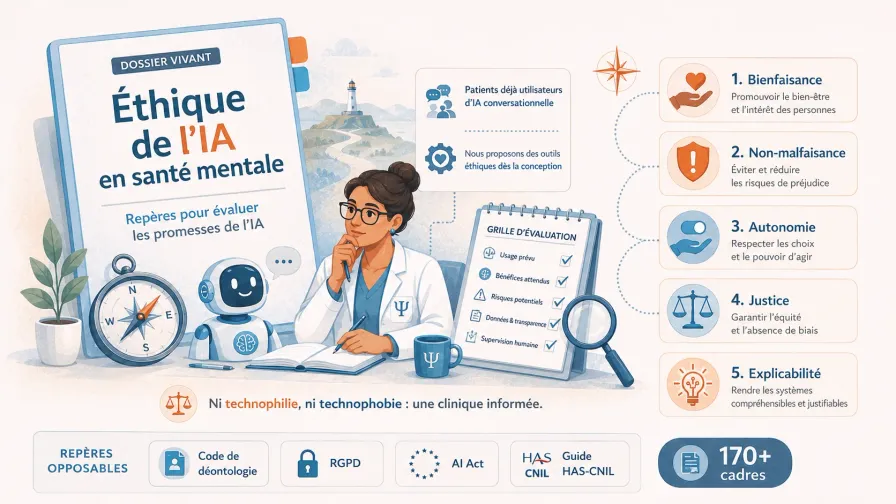
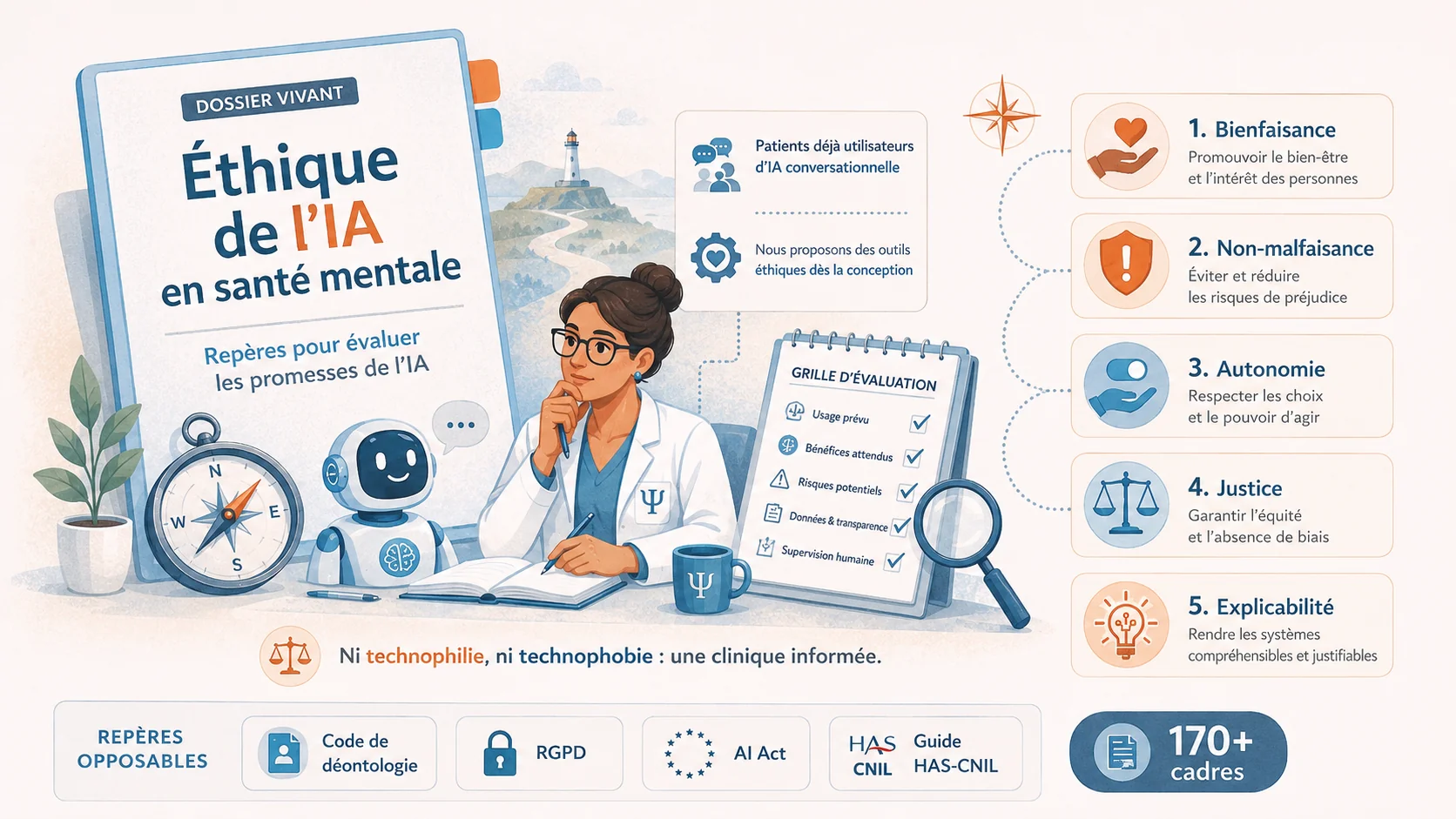
The five principles, resource by resource
The framework of Floridi and Cowls (2019): the four bioethical principles that your professional ethics already operationalizes, plus a fifth specific to AI. Each resource: mechanisms, clinical case, points of caution and other perspectives.
The enforceable benchmarks
Unlike vendor charters, these frameworks are backed by obligations, governing bodies and sanctions. They are what ground your practice.
- Your code of professional ethics — the foundation: the principles of AI frameworks restate its essentials, in a less binding form.
- GDPR — mental health data benefits from reinforced protection that "well-being" applications often circumvent. See the resource Informed Consent and AI.
- European AI Act (2024) — legal obligations for high-risk systems, including AI-based medical devices.
- HAS-CNIL guide (February 2026) — the French sector-specific reference for the sound use of AI systems in care settings. Official PDF (French).
The key concepts of the dossier
Four resources complement the five principles — including the critical perspectives that put them in context.
AI Ethics Frameworks (AIEF)
170+ frameworks published, effectiveness never demonstrated: what "ethical AI" promises are really worth
Therapeutic misconception
When the user believes they are receiving care from a chatbot — the risk that disclaimers do not correct
Ethics of care
The care relationship at the center of ethical reflection, not abstract principles
Informed consent and AI
Consent in the face of algorithmic opacity and invisible data collection
→ All the resources in the Ethics category in the Key Concepts.
The rest of the dossier
This dossier is a living editorial project. Upcoming articles:
- Beneficence put to the test: what "demonstrating a benefit" means
- Therapeutic misconception: when the user believes they are in therapy
- Beyond principles: care, Design Justice and virtue ethics
- Digital CBT in three waves: an ethical reading
To follow the publications: the AI Watch or the media & training page.